
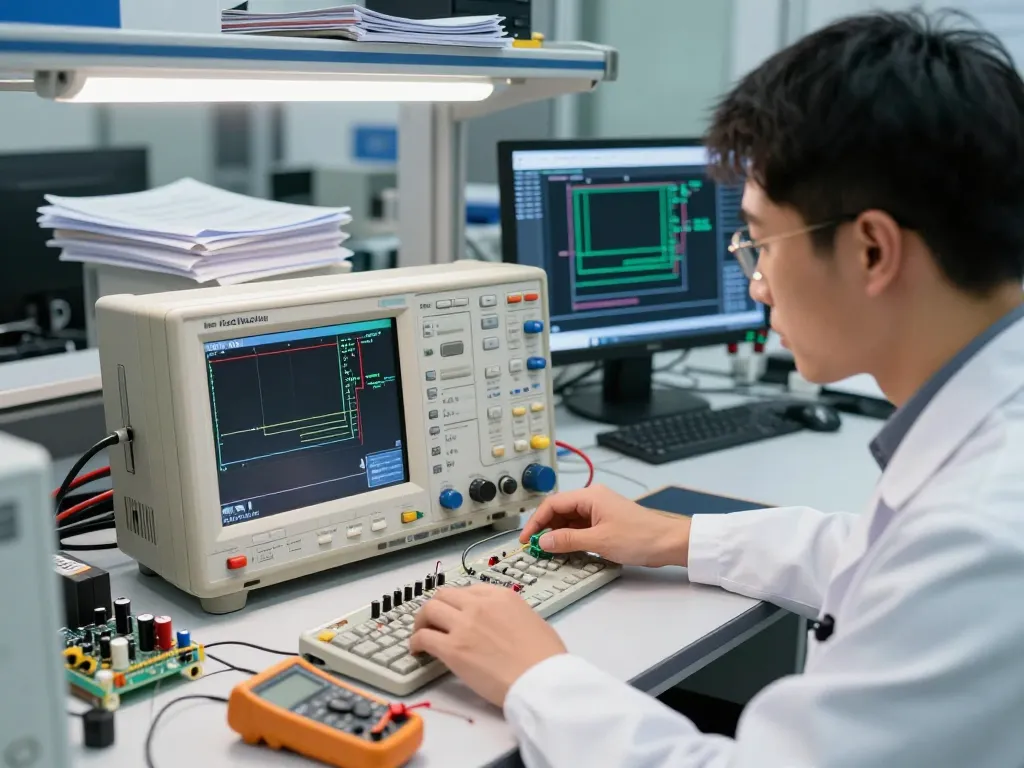
Understanding Digital Oscilloscopes
Digital oscilloscopes have transformed the landscape of electrical signal analysis, offering enhanced functionality and accuracy compared to their analog counterparts. These sophisticated instruments, often referred to as Digital Storage Oscilloscopes (DSOs), are essential for various applications in electronics, automotive engineering, and educational environments. When exploring options, what is a digital oscilloscope provides comprehensive insights into the fundamental operations and myriad benefits of these devices.
What is a Digital Oscilloscope?
A digital oscilloscope is an electronic test instrument that captures, analyzes, and displays electrical signals as waveforms. Unlike analog oscilloscopes, which depict signals in real-time on a cathode-ray tube (CRT), digital oscilloscopes convert the signals into digital data, allowing for advanced processing and analysis. This capability enables them to store waveforms and perform complex measurements, making them invaluable in modern electronic testing.
Key Features of Digital Oscilloscopes
Digital oscilloscopes come equipped with a multitude of features that enhance their functionality:
- High Bandwidth: Allows for the capture of fast signals with greater accuracy.
- Data Storage: Users can save waveforms for later analysis, which is crucial for repetitive testing scenarios.
- Multiple Channels: Many models offer two or more input channels, enabling simultaneous observation of multiple signals.
- Advanced Triggering Options: Enhanced capability to trigger on specific signal conditions for more focused analysis.
- User-Friendly Interfaces: Typically equipped with LCD screens and intuitive controls for ease of use.
How Digital Oscilloscopes Differ from Analog Oscilloscopes
The primary difference between digital and analog oscilloscopes lies in their display and data processing capabilities. Digital oscilloscopes convert incoming signals into digital format, allowing for sophisticated analysis, such as mathematical computations and storage. In contrast, analog oscilloscopes display signals in real-time but lack the ability to store or manipulate data effectively. This fundamental shift in technology has led to digital oscilloscopes becoming the preferred choice for engineers and technicians alike.
Applications of Digital Oscilloscopes
Exploring Use Cases in Electronics Testing
Digital oscilloscopes are employed in various fields, particularly in electronics testing, where their accuracy and advanced features shine. They enable engineers to visualize and analyze electrical signals, pinpoint issues with circuit designs, and verify the performance of electronic components. Their ability to store and replay waveforms is particularly beneficial during troubleshooting, allowing for a comprehensive analysis of fault conditions.
Industrial Applications of Digital Oscilloscopes
In industrial settings, digital oscilloscopes play a crucial role in maintaining and diagnosing equipment. For example, in the automotive industry, they are used to troubleshoot vehicle electronic systems, monitor signals from sensors and control units, and ensure compliance with safety standards. The flexibility of these devices also allows for their application in manufacturing processes, where they help maintain quality control of electronic products.
Educational Benefits for Students and Hobbyists
For students and hobbyists, digital oscilloscopes provide an invaluable hands-on learning tool. They facilitate understanding of complex electrical concepts and signal behaviors that are essential for careers in engineering and technology. Many educational institutions incorporate digital oscilloscopes into their curricula, allowing students to gain practical experience and a deeper understanding of electronic principles.
Choosing the Right Digital Oscilloscope
Considerations for Professionals vs. Hobbyists
When selecting a digital oscilloscope, it’s essential to consider the intended application. Professionals may require high bandwidth, advanced triggering options, and multiple channels for complex analyses. On the other hand, hobbyists might prioritize user-friendly features, compact designs, and affordability. Understanding these needs can help streamline the decision-making process to find the ideal oscilloscope.
Comparing Bandwidths: 110MHz vs. 200MHz
Bandwidth is a critical specification that impacts the performance of a digital oscilloscope. A 110MHz bandwidth is sufficient for general electronic applications and is often appropriate for most hobbyist projects. In contrast, a 200MHz bandwidth allows for greater fidelity in signal representation, which is essential for high-frequency applications or professional work in fields like telecommunications. Balancing cost and capabilities is crucial when determining which bandwidth is appropriate for your needs.
Essential Accessories and Add-ons
To maximize the utility of a digital oscilloscope, several accessories and add-ons can enhance its functionality:
- Probes: High-quality probes are essential for accurate measurements; different types cater to various applications.
- Software: Many oscilloscopes offer software to analyze data on a PC or integrate with other measurement tools.
- Carrying Cases: For those who transport their oscilloscopes frequently, protective cases can help ensure longevity.
- Calibration Tools: Regular calibration helps maintain accuracy over time, an important factor for professional users.
Best Practices for Using a Digital Oscilloscope
Setting Up Your Oscilloscope for Accurate Measurements
Proper setup of a digital oscilloscope is key to obtaining reliable measurements. This includes selecting the correct probe type, configuring the time base and voltage scale appropriately, and ensuring a good grounding connection. A well-set oscilloscope can drastically reduce measurement errors and improve the quality of data collected in experiments.
Common Mistakes to Avoid
Users, especially those new to digital oscilloscopes, often make common errors that can compromise their results:
- Improper Probe Connection: Ensure probes are correctly connected to avoid inaccurate readings.
- Incorrect Voltage Scaling: Set voltage limits to match the expected signal levels to prevent clipping.
- Neglecting Grounding: Poor grounding can lead to noise and affect measurement reliability.
Advanced Techniques for Signal Analysis
For experienced users, leveraging advanced features of digital oscilloscopes can enhance signal analysis:
- Mathematical Functions: Use built-in math functions to compare signals or derive new waveforms.
- Cursor Measurements: Utilizing cursors allows for precise measurement of signal characteristics, such as rise time and frequency.
- Automated Testing: Automate repetitive test sequences to improve efficiency in measurements.
Future Trends in Oscilloscope Technology
Innovative Features to Watch in 2026
The future of digital oscilloscopes looks promising, with continuous advancements anticipated. Features such as enhanced data visualization, connectivity options for remote monitoring, and machine learning algorithms for pattern recognition are becoming more prevalent. These innovations will allow users to extract deeper insights from their measurements and enhance their analytical capabilities.
Integration with IoT and Smart Technologies
As industries increasingly adopt IoT technologies, digital oscilloscopes will evolve to integrate seamlessly with these systems. This integration will enable real-time monitoring and data collection across networks, opening up new possibilities for predictive maintenance and remote diagnostics.
Emerging Standards in Signal Analysis
With the rapid pace of technological change, new standards in signal analysis are necessary to ensure compatibility and performance across different devices. Future digital oscilloscopes will likely adhere to these emerging standards, ensuring they meet the demands of next-generation electronic systems and applications.
What is a digital oscilloscope used for?
Digital oscilloscopes are utilized for a variety of tasks, including troubleshooting electronic circuits, verifying signal integrity, and performing complex measurements. Their ability to visualize how voltage changes over time provides critical insights into electronic behaviors that are essential for innovation and testing.
How do you read a digital oscilloscope?
Reading a digital oscilloscope requires understanding its display, which typically shows voltage on the vertical axis and time on the horizontal axis. Key features to look for include the waveform shape, measurement markers, and any anomalies that may indicate issues within the tested circuit.
What should I look for in a digital oscilloscope?
When purchasing a digital oscilloscope, consider factors such as bandwidth, sample rate, number of channels, and the variety of measurement functions offered. Additionally, ease of use, the quality of the display, and the availability of customer support are important aspects to consider.
What are the benefits of using a digital oscilloscope?
The primary benefits of using a digital oscilloscope include enhanced measurement precision, the ability to store and analyze waveforms, and advanced triggering capabilities, all of which facilitate better troubleshooting and signal analysis.
Can I use a digital oscilloscope for automotive diagnostics?
Yes, digital oscilloscopes are widely used in automotive diagnostics to analyze signals from electronic control units (ECUs), sensors, and actuators. They help technicians diagnose issues related to ignition timing, sensor outputs, and communication between vehicle systems, making them invaluable tools in automotive repair.

